Friday, 17 May 2013

WHY NOT ADD STYLE AND VALUE WITH HANGING TILES

Hanging tiles are an excellent way to add value, character and individuality to both new build and the restoration of older styled properties.


The tradition of hanging roofing tiles vertically, particularly on the first floor and upper storeys of buildings, goes back to the late seventeenth century, when they first started appearing in the south of England.

Even now, they are a popular and creative way of enhancing homes with a touch of ‘olde world’ charm.

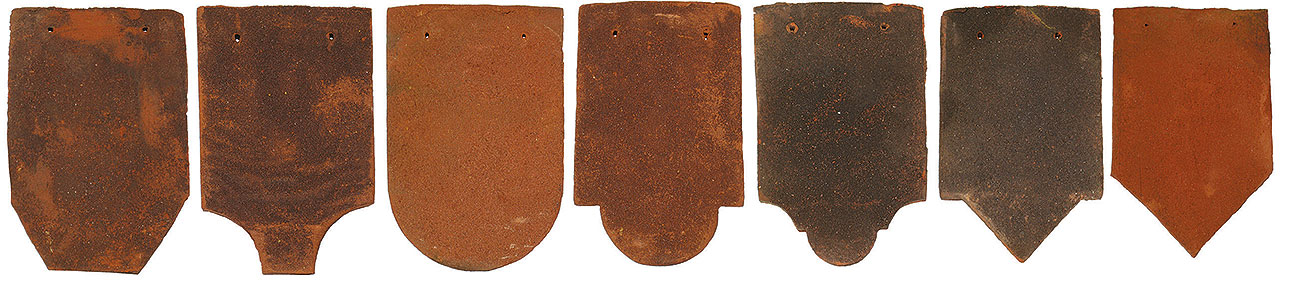
With their distinctive double camber and time weathered appearance, Tudor’s vertical tiles are ideal for traditional or heritage styled properties, where they can be combined with a choice of decorative and ornamental tiles, to create a stunning feature.

Alternatively, they are an excellent way to add character to modern properties, which may already have ordinary and unprepossessing machine made clay or concrete tiles on the roof.


When used over brickwork, hanging tiles can also help cover some of the irregularities in the walls, minimising rain penetration and increasing thermal insulation.


Tudor’s ‘conservation’ and ‘traditional’ nibbed plain roof tiles are available in five mellow tones: Medium Antique, Dark Antique, Red Antique and the classic Sussex colours of red or brown, plus our new Jubilee range where two colours are mixed on each tile.

Wednesday, 13 March 2013

THE IMPORTANCE OF OBSERVING BAT LEGISTLATION


Bat occupation is an increasingly important consideration particularly when renovating buildings in locations where bats are known to frequent, such as cottages, barns, churches and country houses.

Builders and homeowners must therefore be vigilant to make sure that the stringent legislation, designed to protect Britain’s endangered bat population, is always observed.

According to the latest ‘Habitats Regulations’, if a property is or has been home to one or more bats, at any time, advice and precautions must be taken when working on the building, and provision must be made to allow access for the bats to return in the future. 

The potential fine for destroying a roost is £5,000 per bat or six
months in prison.

Tudor Roof Tiles manufactures an innovative range of  bat access tiles’ to help you protect this endangered species.


Designed with an 18mm x 165mm tunnel, which leads to an entrance hole in the undertiles, they allow the bats to enter and leave the roof space unhindered.  Furthermore, as Tudor tiles typically have a large double camber, they also help keep those roosts, which are located between the tile and underfelt well ventilated and protected from extremes of heat.
                                                                                       
In addition to the access tiles, Tudor also manufactures a range of ridge tiles, with similar bat access points, plus a number of bespoke options to suit specific building and refurbishment projects.

With our specially designed range of  ‘bat access tiles’ common breeds, such as thePipistrelle’ and ‘Brown Long Eared’ bats, can be accommodated easily and with the minimum of disruption.


The Tudor ‘Bat Access Set’ is part of the ‘Conservation range’, which is ideal for conservation projects. The range is available in five colours: medium antique, dark antique and red and the traditional Sussex colours of red and brown or in Natural Clay (without the coloured sand face).

For more information about bat conservation contact the Bat Conservation Trust www.bats.org.uk


Wednesday, 27 February 2013

A Roofing Salesman's Lot

One of my colleagues sent this to me the other day and it's so true- we've all been there- those days when nothing seems to be going right, then out of nowhere, that day changes for the better!

I often get an 'ear worm' song going round my head on a continuous loop.
This particular winters day it was Gilbert and Sullivan's "A Policeman's Lot Is Not A Happy One", (down an octave), "Happy One".
I did my own editing and replaced 'Policeman' with 'Roofing Salesman'.

Trundling along the motorway in the rain with the grey road, grey sky, grey Armco following a grey and dirty van which someone had scrawled on the tailgate 'Darren Is A Twit'. It was one of those days. Stop-start, stop-start, crawl-creep, crawl-creep. The gantry flashing 'Delay Ahead 40mph'. So why have I been doing less than 10mph for the last 2 miles? Grrr!. I know, I'll get off at the next service area and take a break from the rat race.  
Exit motorway, park at furthest most point from the building as everyone else seems to have had the same idea. Trudge across the car park with the howling wind ensuring the horizontal rain washes my face, inadvertently stepping into a puddle - 1 wet ankle (left).
Queue up, consume coffee, exit building making a mental note not to stop here again. Overpriced and luke warm beverage. Trudge back to the car with the wind driven rain ensuring the back of my neck gets a good soaking. Remember to avoid the puddle, only to be splashed by an existing van. 1 wet ankle (right).
Indeed, "A Roofing Salesmans Lot Is Not A Happy One",(down an octave) "Happy One".

Back on the motorway, a few more miles and the traffic eases, the rain stops. Ah, that's a bit better.  I'm early for my appointment so I will have a look at the job we supplied tiles to recently, only a couple of miles further on. Exit motorway. A few miles on a lovely country road, the cloud is lifting and as I round the corner, the sun very timely makes an appearance just as the completed roof comes into view.  Wow!! That looks good – Tudor’s handmade Plain Tiles in a mix of Medium Antique, Red Antique and Jubilee colours. That's brought a smile to my face. Today is going to be a good day. What was that tune I was humming?. Oh yes, I remember - "A Roofing Salesman's Lot IS A Happy One", (down an actave) "Happy One".

Tuesday, 4 December 2012

The 0rigin of Peg Tiles

The oldest plain tiles in the UK date back to as far back as the 12th and 13th centuries. They were named ‘peg tiles’ after the softwood pegs, which were driven through two square holes in the top edge of the tiles, attaching them to the laths or battens.

Their distinctive appearance was characterised by an idiosyncratic variation in texture, camber and colour. Depending on the local clay, where they were produced, the firing temperature and the skill of the local or travelling tile maker, this variation could range from pale orange to a dark red.

Although it was decreed in a Royal Charter of Edward IV in 1477 that clay tiles should be standardised to 10½" x 6½" countrywide, there were inevitably some regional differences. Kent peg tiles remained predominantly 9" x 6" up until the late 19th century when they became typically 10" x 6" and plain tiles 10½" x 6½", to the present day.

At Tudor, we have endeavoured to replicate the idiosyncratic form and character of the original clay peg tiles.

Each of our sand faced peg (and plain) tiles are pressed, moulded and trimmed by hand to create their gentle camber and ‘time worn’ appearance and can be produced with square or round peg holes, and with or without nail holes.

Available in mellow tones: ‘medium antique’, ‘dark antique’ and ‘red antique’ plus the traditional Sussex colours of red and brown, there are subtle colour variations within each of the tiles, as well as from one tile to another making them comparable with the peg and plain tiles of yesteryear.

Friday, 16 November 2012

Specifying Roof Tiles - Handmade or Machine Made?

One of the major decisions for architects, conservationists and home renovators is deciding whether to specify machine made or handmade clay plain tiles.

Mass-produced machine made roof tiles may be economical, but they are usually flat with a uniform appearance. Whilst this may suit some modern buildings, if you are looking for something more special and individual, which will add style, character and kerb appeal to a property, then nothing can beat the 'olde world' charm of a traditional handmade plain or peg tile.

Tudor's traditionally made Peg and Plain Tiles offer a subtle variation in texture, colour and camber and an instant aged appearance which complements period and heritage buildings, which is why they are often specified in conservation areas.

As all the tiles are hand pressed, moulded and trimmed, they can successfully recreate the idiosyncrasies of the original sand faced plain or peg tiles, whilst highly advanced firing techniques ensure exceptional performance and durability, which exceed British Standards.

Suitable for both traditional and modern roofing construction methods, they can incorporate square (or round) peg holes, as well as nibs on the underside, making them an entirely practical as well as attractive solution. 

Friday, 6 July 2012

BATS AND PEG TILES IN OLD ROOFS!

Refurbishing the roofs of old and historic buildings can be a real challenge for builders - particularly when the original peg tiles and rafters need to be replaced and the protection of an endangered species is also involved!

Such a challenge was recently encountered during the refurbishment of Bethersden Primary School in Kent. 


The roof of this hundred year old building, which still had its original peg tiles, had fallen into a state of disrepair over the years and, being in a conservation area, only ‘like for like’ replacement peg tiles could be used.

Tudor supplied 28,000 new hand made peg tiles, with traditional square peg holes, in a mix of 70% medium antique and 30% dark antique, to give an ‘olde world’,  time weathered appearance.

As the historic school was also a possible roosting site for pipistrelle and brown long-eared bats, great care had to be taken not to disturb the bats’ habitat.  Tudor provided easy entry into the roof space through innovative ‘bat access tiles’ located in the roof and ridge.     
                                     
Which goes to show, with high quality workmanship, use of sympathetic materials, and a careful approach to conservation in accordance with the EPS license, bats and replacing peg tiles in old roofs need not be insurmountable!